Mister Rogers arrives with a small juniper tree which he shows just before Mr. McFeely stops by with pictures of various other trees. Mister Rogers and Mr. McFeely look at the trees on Picture Picture.
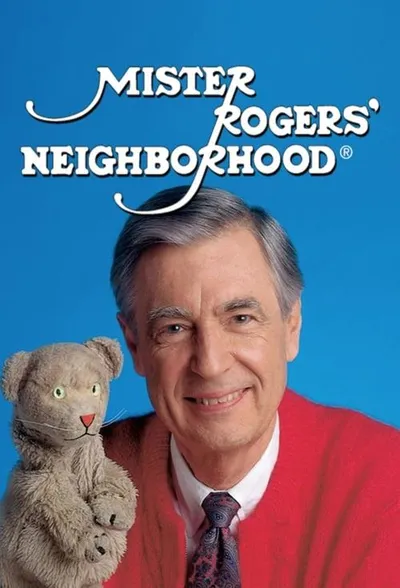
Mister Rogers' Neighborhood is an American children's television series that was created and hosted by namesake Fred Rogers. The series originated in 1963 as Misterogers on CBC Television, and was later debuted in 1966 as Misterogers' Neighborhood on the regional Eastern Educational Network, followed by its US network debut on February 19, 1968, and it aired on NET and its successor, PBS, until August 31, 2001. The series is aimed primarily at preschool ages 2 to 5, but has been stated by PBS as "appropriate for all ages". Mister Rogers' Neighborhood was produced by Pittsburgh, Pennsylvania, USA public broadcaster WQED and Rogers' non-profit production company Family Communications, Inc.; previously known as Small World Enterprises prior to 1971, the company was renamed The Fred Rogers Company after Rogers' death.
Regional listings, not a guarantee of subscription access.
The peaks and the valleys. Find the essential episodes — and the ones to skip.
Mister Rogers arrives with a small juniper tree which he shows just before Mr. McFeely stops by with pictures of various other trees. Mister Rogers and Mr. McFeely look at the trees on Picture Picture.
Everyone in the Neighborhood of Make-Believe now knows that Lady Elaine is still dwelling on that day long ago when somebody hurt her feelings, but when the time comes to "judge" all the artwork she arrives not with a judgment, but with a collage of all the neighbors. It is Lady Elaine's rightful act of compassion toward those around her. Mr. McFeely and Rogers share a video collage of artists in their various fields.
World-renowned cellist Yo-Yo Ma comes to visit Mister Rogers. They talk about music and feelings, and Yo-Yo Ma shows how his cello music can express many different emotions. And there's a video of how people make bass violins.
Mister Rogers brings a clown mask and talks about clowns. There are visiting clowns In Make-Believe, too. Queen Sara and Mayor Maggie learned a lot about each other from switching jobs, but decide they're happier in their own jobs.
Each point is an episode, plotted in order. Colored bands mark season boundaries. Look for the rise, the plateau, or the decline.
High votes + high rating = beloved classic. High votes + low rating = notorious stinker. Low votes + high rating = hidden gem.
One point per season. Smooths out the episode-to-episode noise to reveal the bigger arc.
Did each season build or fizzle? Green means the finale outscored the premiere. Red means the opposite. Longer arrows, bigger swings.
How steady is each season? Tightly clustered dots mean reliable quality. Scattered dots mean a wild ride.
Connection lost