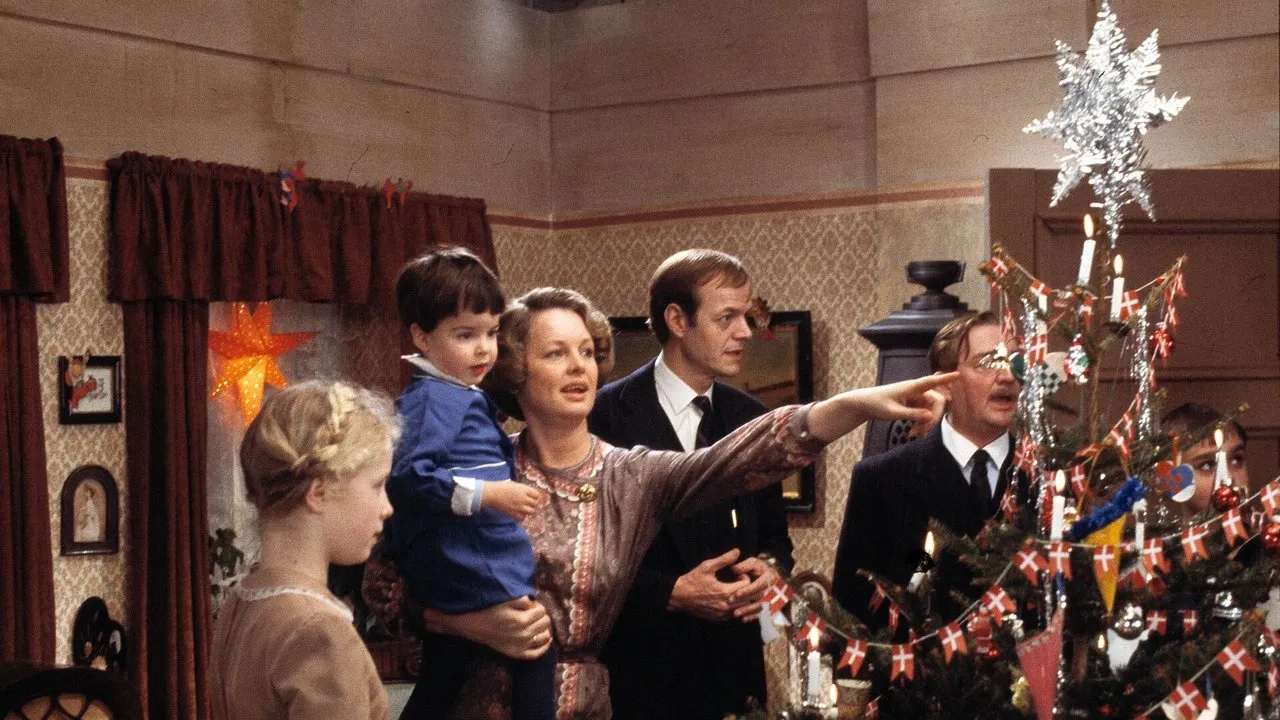
When the Danish persecution of Jews begins so are Mr. Stein at Korsbæk Bank in danger, but Maude Varnæs steps into character and rescues him safely to the pig dealer's house. And the local resistance movement blows up the Germans' fleet.
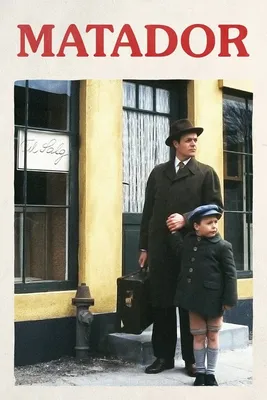
Matador is a Danish TV series produced and shown between 1978 and 1982. It is set in the fictional Danish town of Korsbæk between 1929 and 1947. It follows the lives of a range of characters from across the social spectrum, focusing specifically on the rivalry between the families of two businessmen: The banker Hans Christian Varnæs, an established local worthy, and social climber Mads Skjern, who arrives in town as the series opens. The name Matador was taken from the localised edition of the boardgame Monopoly, also the series' tentative English title. In addition, in contemporary Danish a "matador" is often used to describe a business tycoon, in the series referring to the character of Mads Skjern and his craftiness as a self-made entrepreneur. Directed by famed Danish film maker Erik Balling, Matador was the idea of author Lise Nørgaard who wrote the bulk of the episodes alongside Karen Smith, Jens Louis Petersen and Paul Hammerich. The series is one of the most well-known and popular examples of Danish television and represents the peak of longtime development of Danish TV drama by the public service channel Danmarks Radio. The series has become part of the modern self-understanding of Danes, partly because of its successful mix of melodrama and a distinct warm Danish humour in the depiction of characters, which were portrayed by a wide range of the most popular Danish actors at the time; but also not least because of its accurate portrayal of a turbulent Denmark from around the start of the Great Depression and through Nazi Germany's occupation of Denmark in World War II.
The peaks and the valleys. Find the essential episodes — and the ones to skip.
When the Danish persecution of Jews begins so are Mr. Stein at Korsbæk Bank in danger, but Maude Varnæs steps into character and rescues him safely to the pig dealer's house. And the local resistance movement blows up the Germans' fleet.
Mads is once again caught up in the town hall scandal, but is saved by a marriage. And Lauritz and Herbert takes part in the Spanish Civil War. While the family life is put to the test at Varnæs when a new housekeeper intervenes.
In 1930, everyone did not manage as well as Mads Andersen's screen. This applies, for example, to the holder of Damernes Magasin, Albert Arnesen, who will have to invite his first-man Mr Schwann, who has just had a lesser legacy, to become his partner, to prevent a threatening bankruptcy. Arnold has finished his education at Arnesen and takes work at Mads Skjern. The 30's have just started - a time of turbulence, especially in the political sphere. The dams come to Korsbæk where there is a loud noise of agitation - both on the conservative and socialist front. Mads marries Ingeborg and adopts her daughter Ellen.
Arnold has made a girl pregnant, and Mrs. Violet does everything to avoid an unfortunate marriage, and Ingeborg intervenes at the last minute. While Jørgennow lives at the mercy of Mads. And Andersen hits on Violet when she's got money.
Each point is an episode, plotted in order. Colored bands mark season boundaries. Look for the rise, the plateau, or the decline.
High votes + high rating = beloved classic. High votes + low rating = notorious stinker. Low votes + high rating = hidden gem.
One point per season. Smooths out the episode-to-episode noise to reveal the bigger arc.
Did each season build or fizzle? Green means the finale outscored the premiere. Red means the opposite. Longer arrows, bigger swings.
How steady is each season? Tightly clustered dots mean reliable quality. Scattered dots mean a wild ride.
Connection lost