


#1
S6E8
Shield of Honor
Hunter's new trainee, the son of a career officer, has problems doing his duty as they investigate a series of robbery-murders.
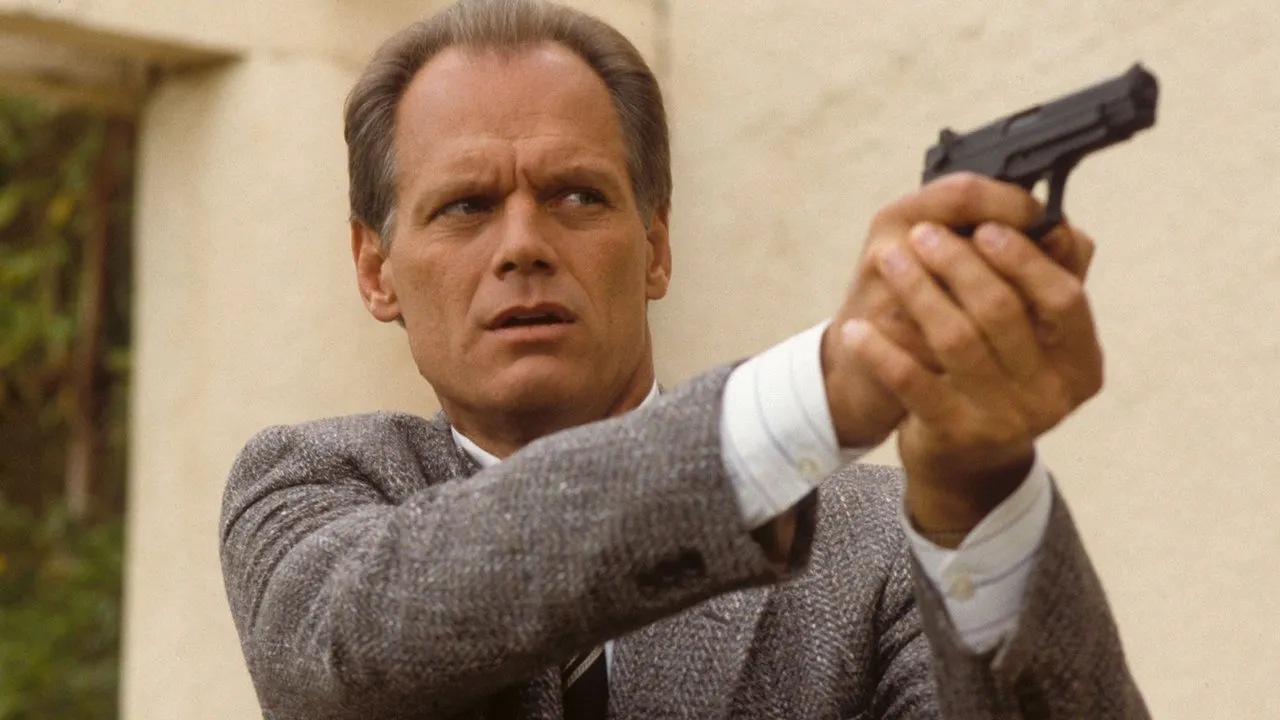
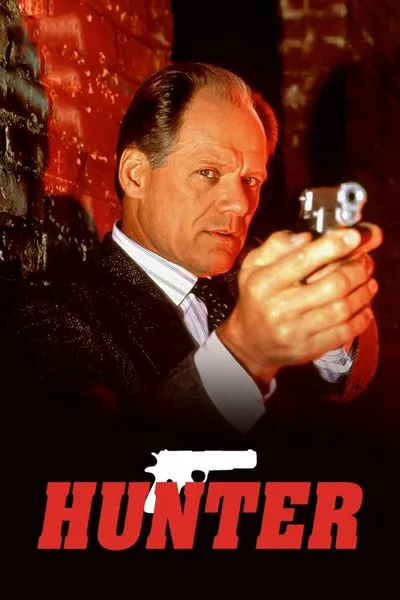
Hunter is an American police drama television series created by Frank Lupo, and starring Fred Dryer as Sgt. Rick Hunter and Stepfanie Kramer as Sgt. Dee Dee McCall, which ran on NBC from 1984 to 1991. However, Kramer left after the sixth season to pursue other acting and musical opportunities. In the seventh season, Hunter partnered with two different women officers. The titular character, Sgt. Rick Hunter, was a wily, physically imposing, and often rule-breaking homicide detective with the Los Angeles Police Department. The show's main characters, Hunter and McCall, resolve many of their cases by shooting dead the perpetrators. The show's executive producer during the first season was Stephen J. Cannell, whose company produced the series.

Regional listings, not a guarantee of subscription access.
The peaks and the valleys. Find the essential episodes — and the ones to skip.
Hunter's new trainee, the son of a career officer, has problems doing his duty as they investigate a series of robbery-murders.
Hunter and McCall's visit to a police psychiatrist regarding a work-related incident reveals a more intimate relationship years before.
When McCall is raped by a South American diplomat who's immune from prosecution, Hunter turns renegade and follows the man to his homeland.
Hunter and Molenski battle a neighborhood watch group whose members are taking the law into their own hands.
Each point is an episode, plotted in order. Colored bands mark season boundaries. Look for the rise, the plateau, or the decline.
High votes + high rating = beloved classic. High votes + low rating = notorious stinker. Low votes + high rating = hidden gem.
One point per season. Smooths out the episode-to-episode noise to reveal the bigger arc.
Did each season build or fizzle? Green means the finale outscored the premiere. Red means the opposite. Longer arrows, bigger swings.
How steady is each season? Tightly clustered dots mean reliable quality. Scattered dots mean a wild ride.
Connection lost