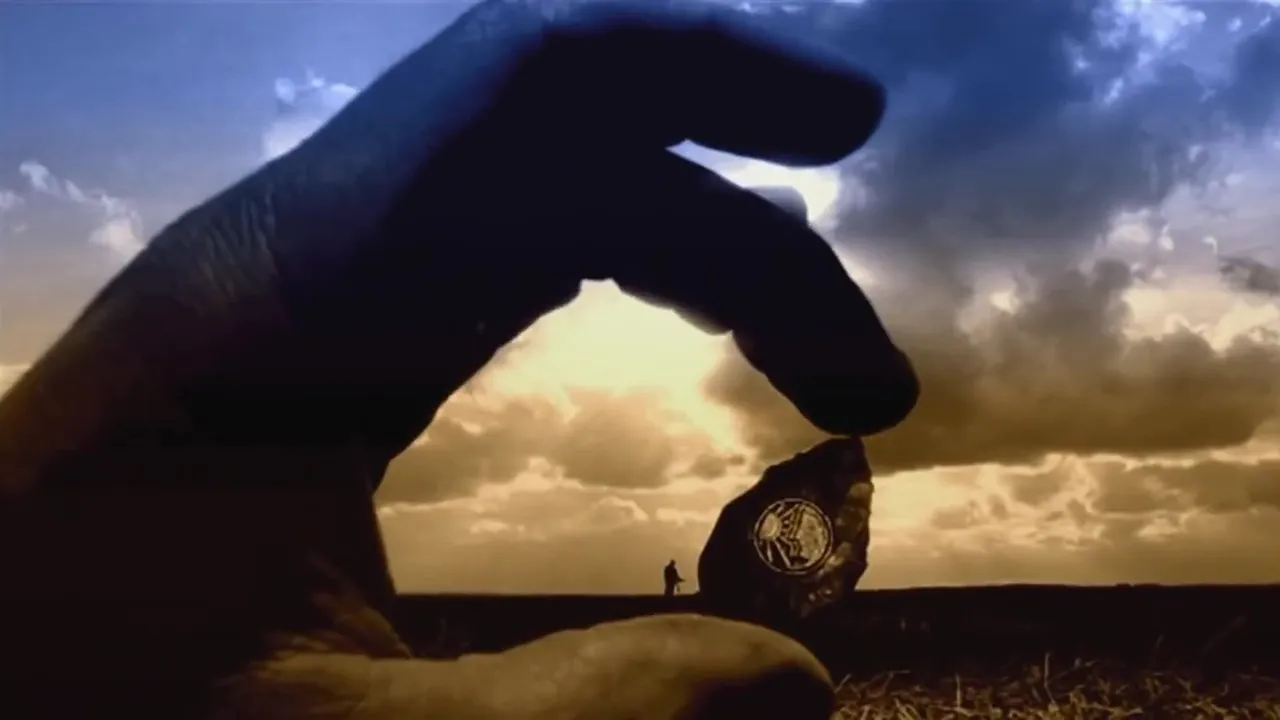
Time Team descend on the Isle of Mull at the invitation of two local amateur archaeologists to investigate a mysterious set of earthworks in a forest near Tobermory. Could they be the remains of a chapel from the time of St Columba?
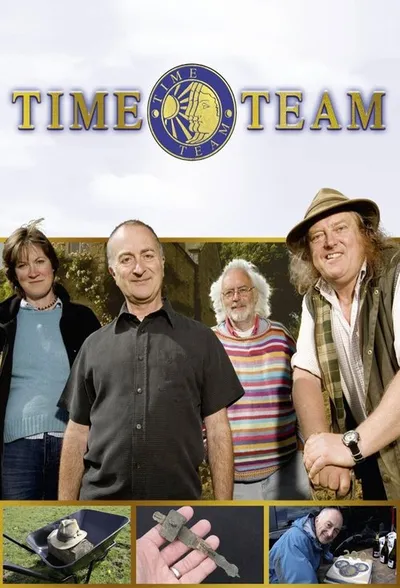
Time Team is a British television series which has been aired on British Channel 4 from 1994. Created by television producer Tim Taylor and presented by actor Tony Robinson, each episode featured a team of specialists carrying out an archaeological dig over a period of three days, with Robinson explaining the process in layman's terms. This team of specialists changed throughout the series' run, although has consistently included professional archaeologists such as Mick Aston, Carenza Lewis, Francis Pryor and Phil Harding. The sites excavated over the show's run have ranged in date from the Palaeolithic right through to the Second World War.
The peaks and the valleys. Find the essential episodes — and the ones to skip.
Time Team descend on the Isle of Mull at the invitation of two local amateur archaeologists to investigate a mysterious set of earthworks in a forest near Tobermory. Could they be the remains of a chapel from the time of St Columba?
In deepest Wales lies an extraordinary site, with a Megalith, a Neolithic tomb, a Norman watchtower, early Christian symbols, and a natural spring. From this spring, the landowner has recovered an astonishing variety of coins, sculptures and jewelry. It is almost too good to be true, rather like an ancient theme park. So begins one of Time Team's most remarkable digs. Geophysics shows no structure anywhere on the site. The megalith is far too shallow to have stayed upright for thousands of years. And when the team unearth a sword, they start to get suspicious. They are joined by Celtic ritual expert Miranda Green, architectural historian Will Hughes, and Iron Age specialist Ian Stead. Results show that the site has been 'salted' and the finds have all been placed or build between the 19th century and as late as the 1980s. More info can be found at Llygadwy.
Time Team has never found a Roman temple. But a 30-year-old photograph clearly shows double square cropmarks in a field. Surely this time they will strike lucky? The trouble is, the site may have suffered plough damage. Francis takes charge. Though initial excavations are encouraging, John and Stewart are puzzled by a geophysical anomaly. Including a tessellated pavement and a coin hoard, a picture gradually emerges of not one but four temples - in fact a whole complex of buildings. It proves to be one of the most important excavations in Time Team history.
The Team visits Lincoln's Inn, London where they have been asked to investigate the remains of a 13th-century palace that belonged to Henry III's Lord Chancellor. There were only a few areas within Lincoln's Inn where any excavation could take place. As well as it not being possible to dig under the other historic buildings, a huge London plane tree precluded any excavation that would threaten its root system.
Each point is an episode, plotted in order. Colored bands mark season boundaries. Look for the rise, the plateau, or the decline.
High votes + high rating = beloved classic. High votes + low rating = notorious stinker. Low votes + high rating = hidden gem.
One point per season. Smooths out the episode-to-episode noise to reveal the bigger arc.
Did each season build or fizzle? Green means the finale outscored the premiere. Red means the opposite. Longer arrows, bigger swings.
How steady is each season? Tightly clustered dots mean reliable quality. Scattered dots mean a wild ride.
Connection lost