"Gumbo" traces the roots of jazz from the 1800s to 1917. The viewer will catch glimpses of Jelly Roll Morton, who claimed to have invented jazz, and the tragic, though influential trumpeter, Buddy Bolden.
Jazz is a ten part series that explores the evolution – and the genius – of America’s greatest original art form, focusing on the extraordinary men and women who could do something remarkable – create art on the spot. Jazz celebrates their profoundly enduring, endlessly varied, and infinitely alluring music in the context of the complicated country that gave birth to and influenced it, and was in turn transformed by it.
The peaks and the valleys. Find the essential episodes — and the ones to skip.
"Gumbo" traces the roots of jazz from the 1800s to 1917. The viewer will catch glimpses of Jelly Roll Morton, who claimed to have invented jazz, and the tragic, though influential trumpeter, Buddy Bolden.
In the 1920s, jazz is everywhere, and for the first time soloists and singers take center stage. We meet Bessie Smith, Empress of the Blues; Bix Beiderbecke, the first great white jazz star; and Benny Goodman and Artie Shaw, for whom jazz offers a chance to escape the ghetto and achieve their dreams. Duke Ellington appears at the Cotton Club and Louis Armstrong performs his masterpiece, "West End Blues."
Speakeasies, flappers, and easy money - it's the Jazz Age, when the story of jazz becomes a tale of two great cities, Chicago and New York, and of two extraordinary artists whose lives and music will span almost three-quarters of a century - Louis Armstrong and Duke Ellington. Armstrong grew up on the mean streets of New Orleans and moved to Chicago in 1922, inspiring a new generation of musicians. Meanwhile, Ellington outgrows the society music he learned to play in Washington D.C., and heads to Harlem.
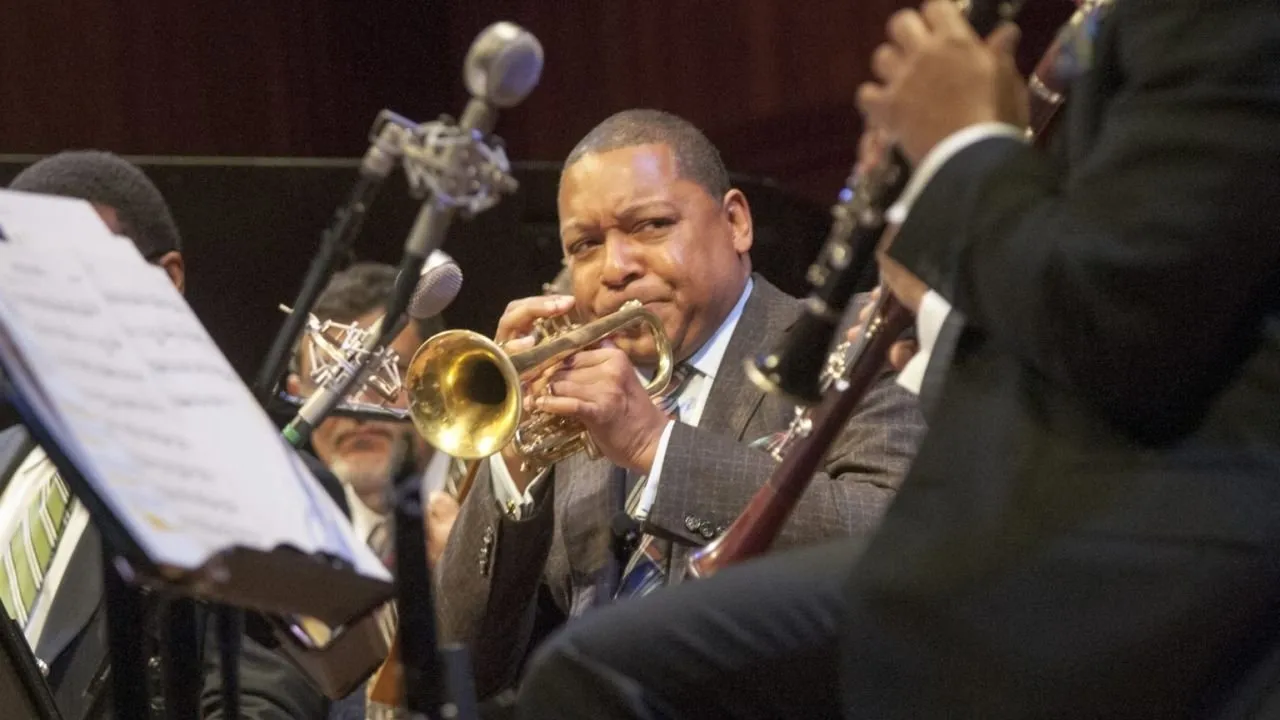
During the Sixties, jazz is in trouble. Though Louis Armstrong briefly outsells the Beatles with "Hello Dolly," most jazz musicians are desperate for work and many head for Europe. In the 1970s, jazz loses the exuberant genius of Louis Armstrong and the transcendent artistry of Duke Ellington, Their passing seems to mark the end of the music itself. But in 1976, when Dexter Gordon returns from Europe for a triumphant comeback, jazz has a homecoming, too. A new generation emerges, led by trumpeter Wynton Marsalis - schooled in the music's traditions, skilled in the art of improvisation, and aflame with ideas. The musical journey that began in New Orleans at the start of the 20th century continues. As it enters its second century, jazz is still brand new every night, still vibrant, still evolving, and still swinging.
Each point is an episode, plotted in order. Colored bands mark season boundaries. Look for the rise, the plateau, or the decline.
High votes + high rating = beloved classic. High votes + low rating = notorious stinker. Low votes + high rating = hidden gem.
Connection lost